 English
 Español


What Is Print on Demand and How Does It Work?
Print on Demand
Print on demand, commonly called POD, is a production model in which an item is printed after a customer places an order. Instead of purchasing large quantities of finished products in advance, the seller prepares designs and product listings while production begins only when an actual sale occurs.
POD is commonly used for T-shirts, hoodies, sweatshirts, mugs, tote bags, posters, and other customizable products. It can be fulfilled by an in-house print provider or through a third-party service that prints and ships orders.
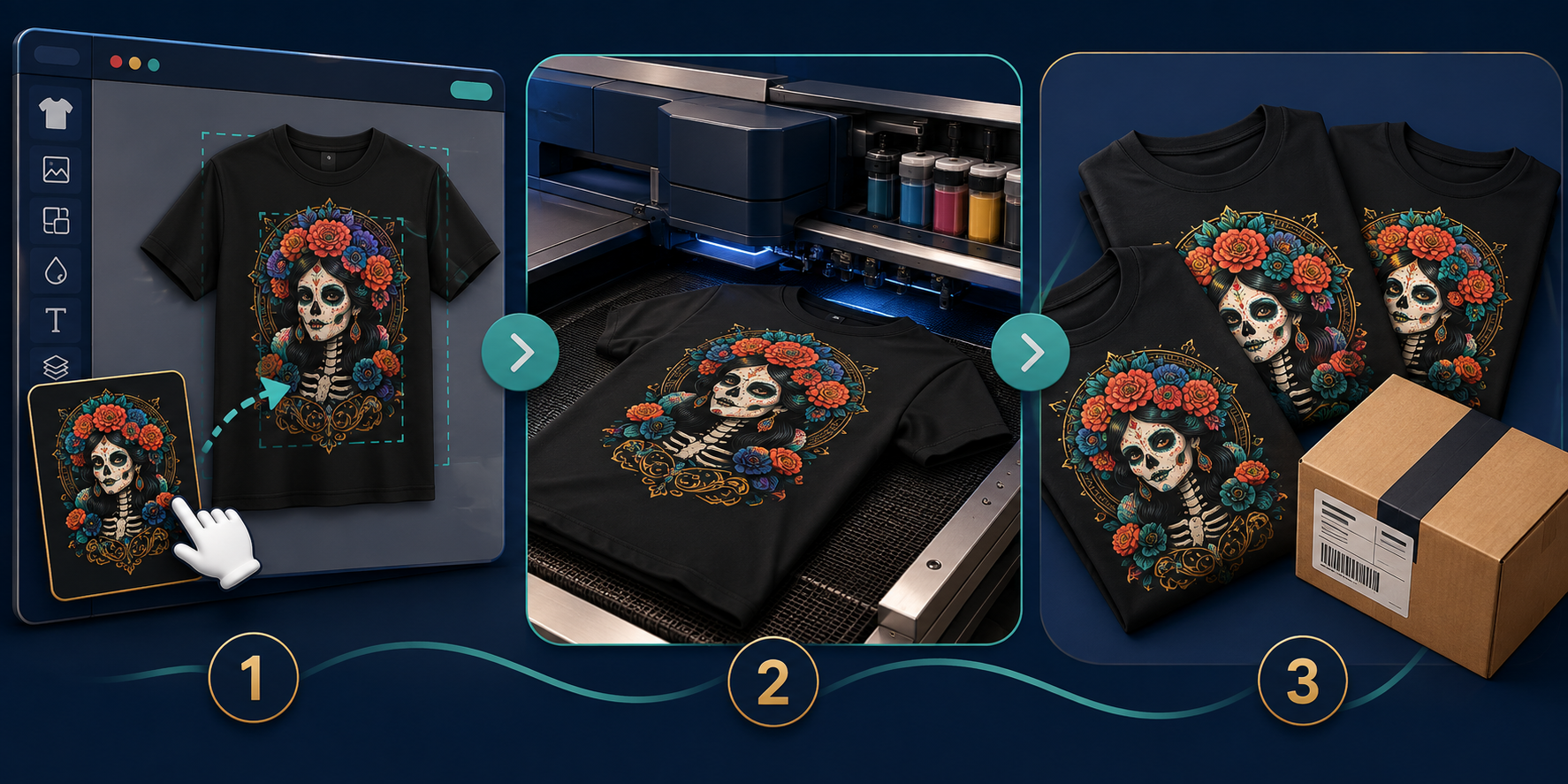
The basic print-on-demand workflow
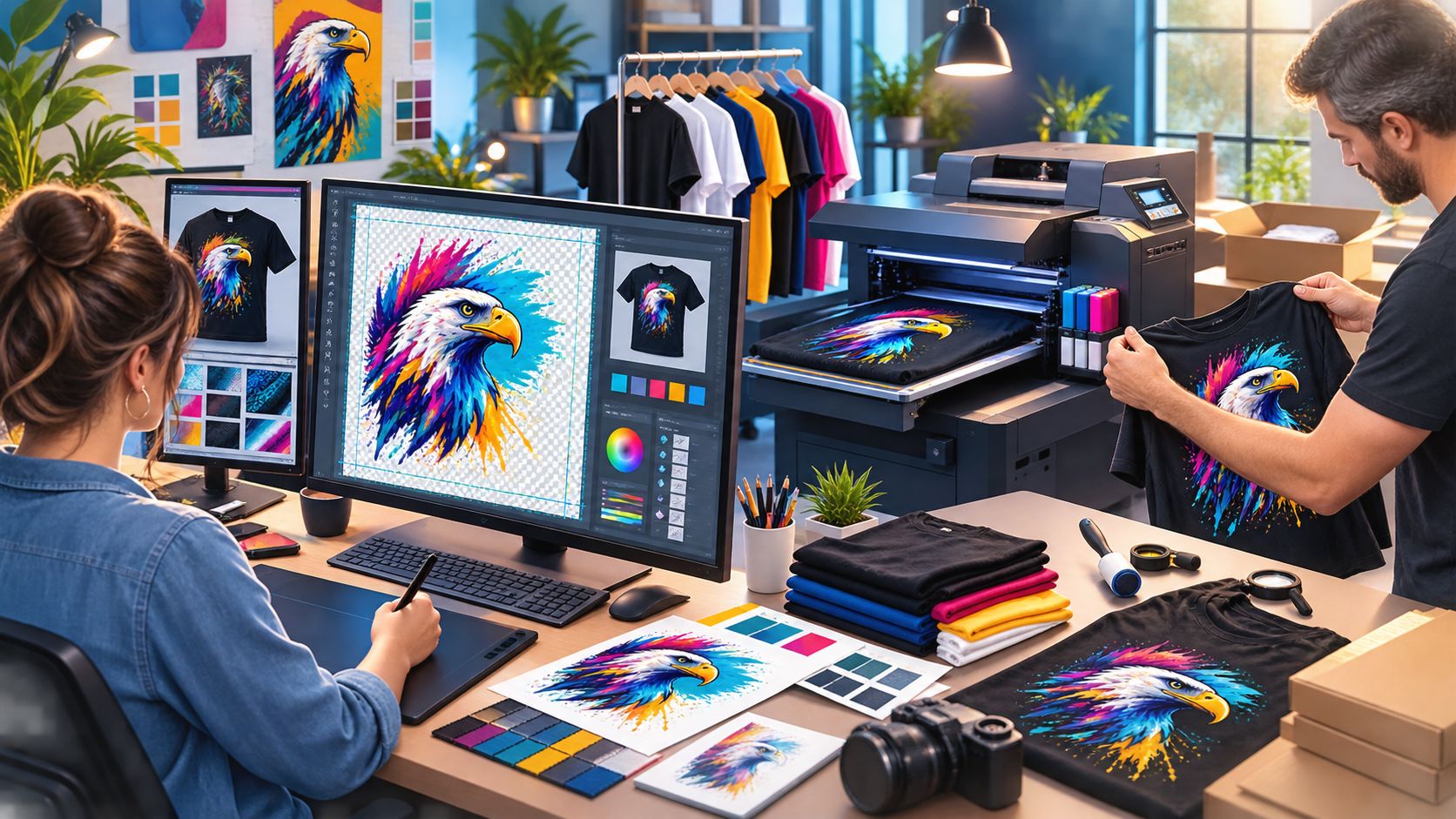
- Create or select a design. The artwork must be suitable for the product and printing method.
- Prepare the product. Choose the garment or item, colors, available sizes, placement, and selling price.
- Publish the listing. Add accurate mockups, descriptions, options, production information, and expected fulfillment times.
- Receive an order. The customer selects the product and completes payment.
- Produce the item. The design is printed on the selected product.
- Inspect, package, and ship. The completed order is prepared for delivery to the customer.
In-house fulfillment versus a POD platform
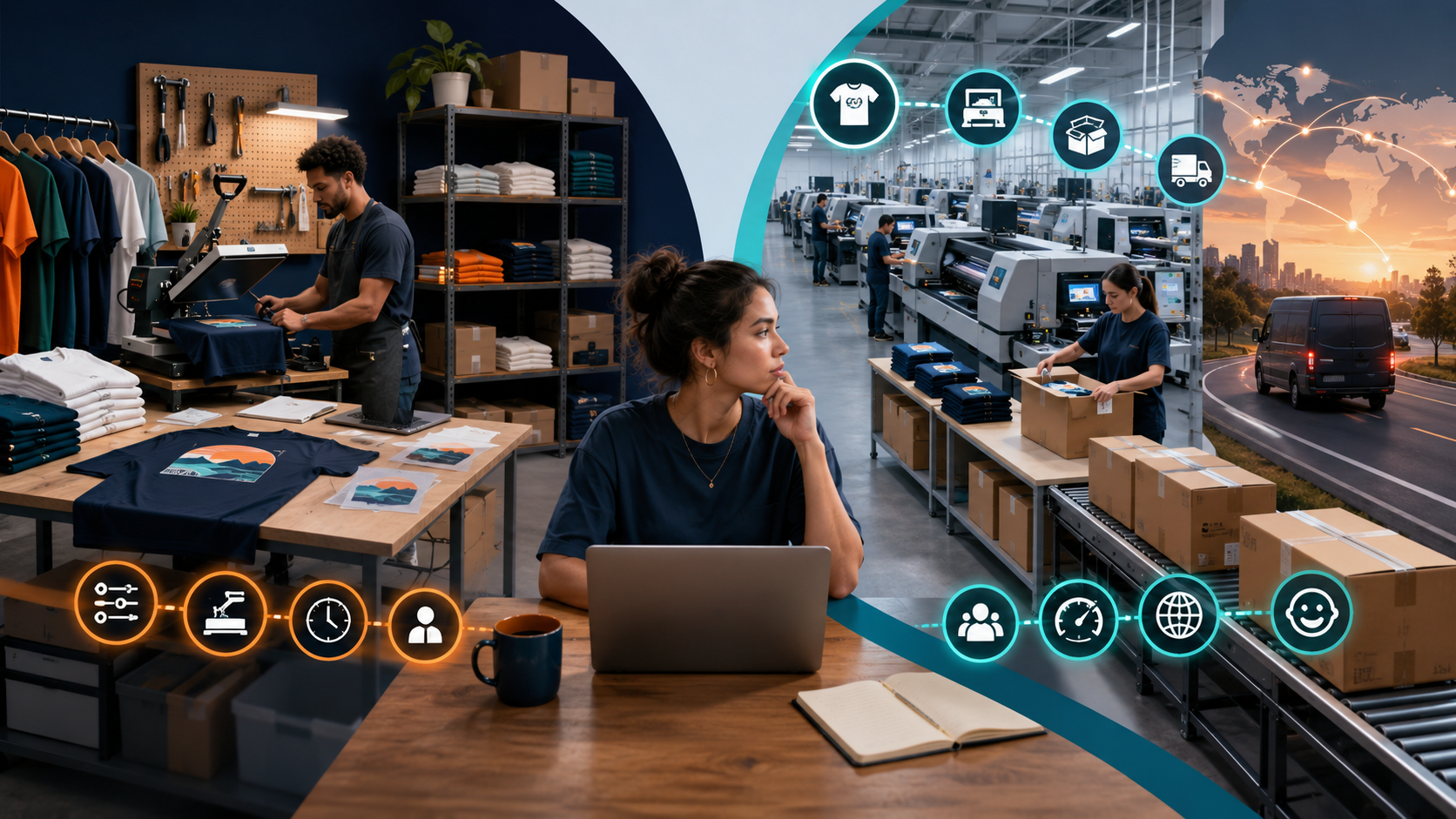
With in-house fulfillment, the seller or local provider handles printing, quality control, packaging, and shipping. This can provide more direct control and may be a good fit for local jobs, specialty work, personalized service, or larger group orders.
With a third-party platform such as Printify, an order can be routed to a connected print provider. The provider produces and ships the item while the seller manages the design, storefront, product selection, pricing, customer expectations, and overall brand experience.
Neither method is automatically best for every order. Product availability, destination, turnaround time, print method, quality, quantity, shipping cost, and profit margin should guide the fulfillment decision.
Why POD is attractive to new sellers
The model can reduce the need to buy large quantities of inventory before knowing which designs will sell. Sellers can test several ideas, discontinue weak products, and expand stronger collections with less unsold stock.
However, lower inventory risk does not mean there is no business risk. Samples, design work, marketplace fees, payment-processing fees, refunds, advertising, sales tax responsibilities, shipping issues, and customer service can still affect profitability.
Artwork and product preparation matter
A visually attractive design may still print poorly if the file is too small, the background is incorrect, the colors are unsuitable, or important details extend beyond the printable area. Follow the required dimensions, resolution, color guidance, and file format for the chosen product.
Review mockups carefully, but remember that a mockup is a presentation—not a guarantee that every screen will reproduce colors exactly. Ordering a sample is one of the best ways to evaluate print size, placement, garment feel, and overall quality before promoting a product heavily.
Understand the true cost
A sustainable price should account for more than the blank product and printing charge. Consider platform and transaction fees, payment processing, shipping subsidies, replacements, taxes, promotions, customer acquisition, and the profit you need from the order.
Clearly communicate whether shipping is included, calculated separately, or offered through a promotion. Production time and shipping time should also be explained separately so customers know what to expect.
POD can also serve groups and businesses
Print on demand is not limited to individual novelty shirts. It can support uniforms, event apparel, school groups, family celebrations, community organizations, branded merchandise, fundraisers, and small product collections. Clients may order one personalized item or several matching garments, depending on the service and fulfillment method.
Start with one well-prepared product
Choose a focused audience, create original artwork, select an appropriate product, verify the file requirements, order a sample, calculate the full cost, and publish an accurate listing. POD makes production more flexible, but thoughtful design, pricing, quality control, and service are what turn that flexibility into a reliable customer experience.