 English
 Español


How to Turn a Tutorial into a Focused Short or Reel
Shorts - Reels
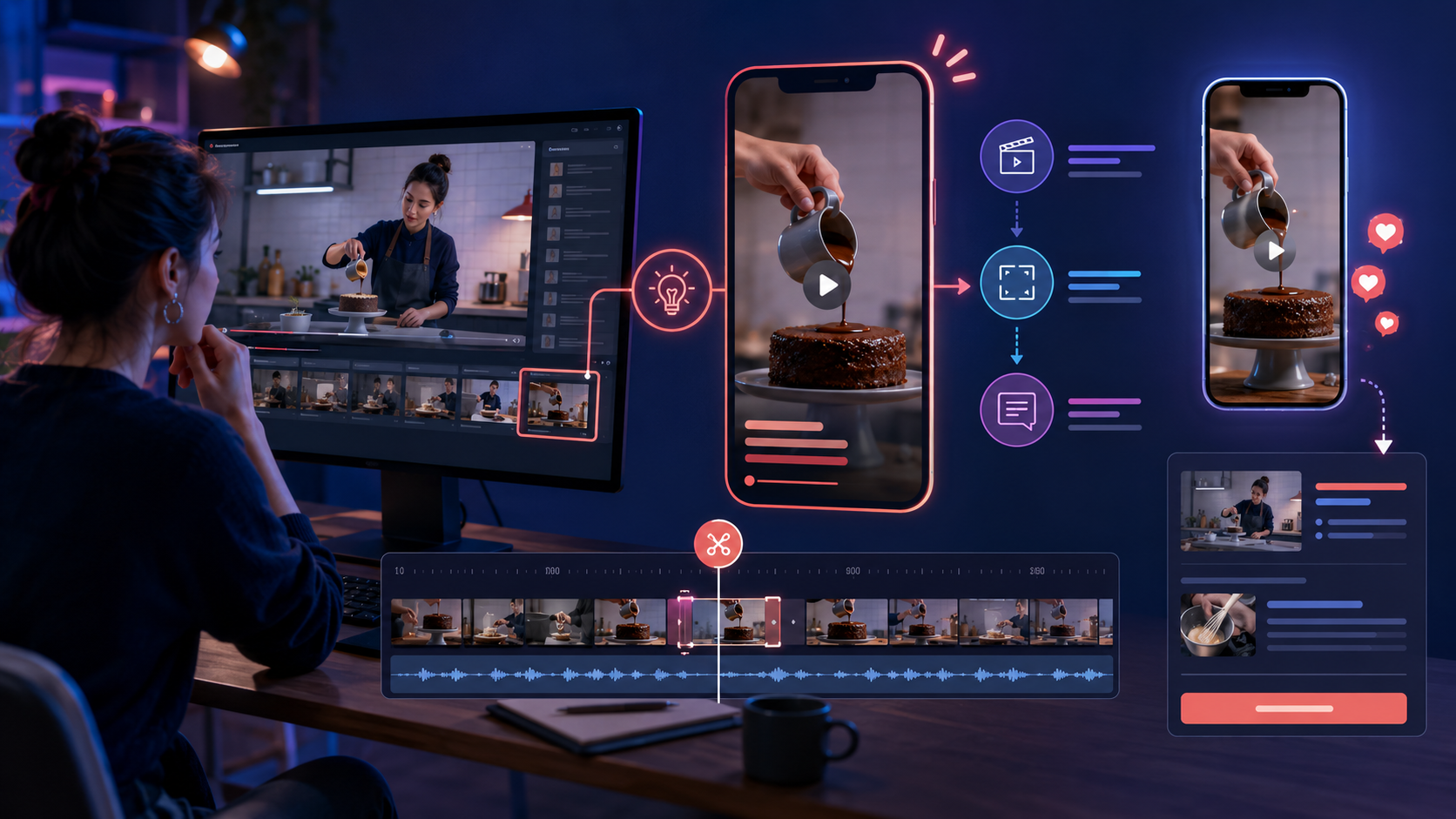
A short or reel is not simply a full tutorial played faster. It is a compact piece of content built around one useful idea. When a long Academy video contains several steps, examples, and explanations, a short can extract the moment most likely to earn attention and give the viewer an immediate result.
Choose one moment—not the entire lesson
Review the tutorial and mark sections that can stand alone: one common mistake, a quick comparison, a before-and-after result, a surprising fact, one practical step, or the answer to a frequent question. The viewer should understand the point without watching several minutes of earlier context.
If the selected moment still requires a long explanation, narrow it again. The complete tutorial and article are the proper places for depth; the short should deliver one complete micro-lesson.
Write a direct opening
The first moments need to establish relevance. Begin with the problem, result, or question rather than a long greeting. An effective opening might identify a costly bookkeeping habit, a product-listing mistake, or a faster way to complete a marketplace task.
A strong opening is specific but honest. Avoid exaggerated promises, artificial emergencies, and unrelated controversy. Attention earned through relevance is more likely to bring the right audience to the full lesson.
Rescript for short-form viewing
Transcribing a tutorial excerpt may produce incomplete sentences and references to information that is no longer visible. Rewrite the segment so it has a beginning, explanation, and conclusion. Use concise spoken language and remove repetition.
A simple structure works well: identify the problem, demonstrate the tip, show the result, and offer one next step. Read the script aloud and trim anything that does not improve understanding.
Reframe vertically
Short-form platforms commonly emphasize vertical video. Do not merely crop the center of a horizontal tutorial and hope the important content remains visible. Reposition the presenter, screen capture, product, or demonstration for the narrower frame.
Enlarge interface details and use close-ups when needed. Keep important faces, hands, products, and controls away from areas that platform buttons or captions may cover. Preview the composition on an actual phone.
Use captions and visual emphasis
Many people begin watching without sound. Add accurate, reviewed captions and keep them readable against the background. Break them into natural phrases rather than displaying a dense paragraph.
Use zooms, arrows, highlights, or cutaway examples only when they direct attention. Rapid effects can make a tutorial harder to follow. The visual movement should support the lesson, not compete with it.
Edit for pace without removing clarity
Remove pauses, repeated words, setup time, and unnecessary navigation. Keep enough breathing room for the viewer to recognize each step. A short that moves too quickly may earn a view but fail to teach anything.
Use clean audio, consistent volume, and properly licensed music when music is included. The narration or demonstration should remain the priority.
Create a meaningful next step
The final action should match the content. Invite viewers to watch the complete tutorial, read the related Academy guide, try the marketplace feature, download a checklist, or contact the relevant service. Avoid asking for several actions at once.
Connect the short to the correct destination rather than a generic homepage. If the short is embedded in an Academy article, activate the Shorts indicator so visitors understand that a quick version is available.
Measure more than views
Views can indicate reach, but also review completion, replays, saves, shares, comments, profile visits, clicks, and actions on the destination page. A smaller short that attracts qualified viewers may be more useful than a broad clip with no connection to the marketplace.
Compare topics and openings over time. Avoid changing every element at once; testing one meaningful difference makes the result easier to interpret.
Short-production checklist
- Select one self-contained tip or result.
- Open immediately with a relevant problem or benefit.
- Rewrite the excerpt as a complete micro-lesson.
- Reframe important content for vertical viewing.
- Add reviewed captions and purposeful visual emphasis.
- End with one relevant next step.
- Measure useful audience actions, not views alone.
Use short content as a doorway
A strong short gives the viewer real value while making the deeper resource easy to find. Used together, the reel earns attention, the tutorial demonstrates the process, and the Academy article preserves the complete explanation. That creates a connected educational path rather than three unrelated pieces of content.